The Isometric Hug: Strength You Can Build From Anywhere
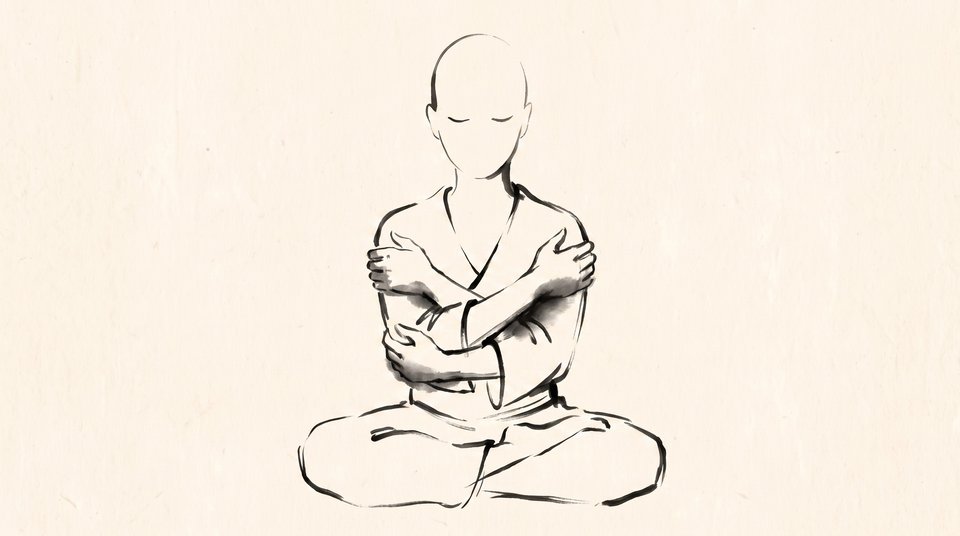
There's a strength exercise I keep coming back to, because it doesn't ask anything of my joints that they aren't already comfortable doing: the isometric hug, sometimes called a bear hug squeeze.
Isometric exercise means the muscle works hard without changing length, and the joint doesn't move at all. There's no repetition to count, no range of motion to manage, no equipment required.
Here's the whole exercise: wrap your arms around yourself like a tight hug, hands interlocked or gripping opposite forearms, elbows pulled in toward each other. Squeeze inward, however much intensity genuinely feels available to you today. Hold for a few seconds. Breathe out slowly rather than holding your breath, which isometric holds make easy to do by accident. Release.
What it works: chest, shoulders, upper back, arms, and core all engage at once, since squeezing your own arms together pulls on nearly every major muscle group in the upper body.
Why I like it in particular for this practice: it fits every one of the book's four lanes without changing at all. Bed, chair, wall, or standing — the exercise doesn't care which one you're in, because nothing about it depends on your legs, your balance, or how much room you have. That's rare for a strength exercise, and it's exactly the kind of rare that matters here.
One honest caveat: isometric holds can raise blood pressure briefly while you're holding the squeeze, more than a lot of dynamic exercises do. If you have a cardiovascular condition, or you're not sure whether that applies to you, it's worth checking with a doctor before making this a regular thing. And regardless — there's no version of this exercise that requires maximum effort to count. A gentle squeeze is still the exercise. "As hard as feels right today" is a complete instruction, not a lesser one.
Try it for ten seconds. Then try it again tomorrow, and notice how it feels different.